
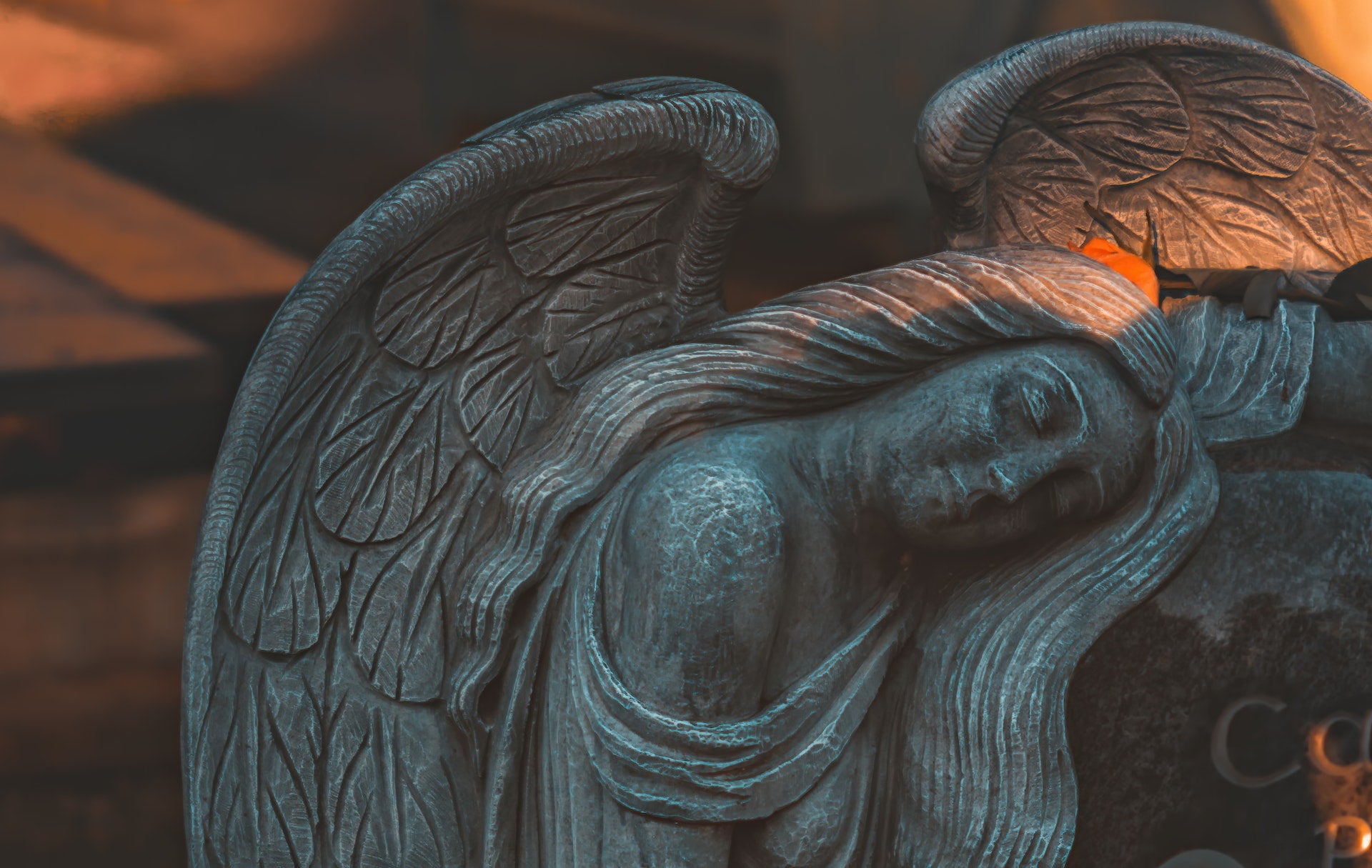
Roland Barthes (1915-1980) is still one of the central figures in contemporary philosophy and critical theory for his contributions to semiotics, linguistics and literary theory are essential to anyone working within those fields of knowledge.
However, it is Barthes’ more intimate philosophical journeys that we wish to present. It is there in his sentimentality, in his deeply affectionate way of elucidating the specters of human emotionality through music and literature, where the French thinker reveals his thought as a beautifully odd search for nuance, for miniature differences uncovering human existence’s endless configurations.

That is why, the following essay concerns Barthes’ famous “Mourning Diary”- a deeply private book of confession that he kept after his mother passed. A journal of grief exploring every fracture a loss can cause. “Mourning diary” is Barthes’ testament to a love’s perseverance and the courage to disclose not only a moaner’s courage but also his/her hopelessness.
In taking these notes, I’m trusting myself to the banality in me. The banality of our mourning. An almost unbearable thought after losing those closest to us. A thought penetrating that which one cannot dare name in his/her encounter with the death of a loved one. To confront the feeling that in loss there is no dignity, no grandeur, no poetry. Only the force of a blunt absence prolonged by a lightness of life’s repetitions after such a devastating event.

For Barthes’ moaner lives in a world that smears the possibility of transforming death into art, into meaning. It is within this experience of grief’s bluntness, that the temptation of becoming cruel, narcissistic, and petty blooms. A lure to punish death’s trivial event and the tears it produces. Tears, inaccessible to writing, to painting, to singing, i.e., to a higher truth.
It is here that Barthes’ philosophical thought reveals itself not as part of the perennial pedagogy that teaches us how to die, but as a labor one devotes to mourning’s harsh reality. A devotion that exposes one’s true vulnerability. That is, the fragile openness not centered around a single living ego afraid of its own end, but an ego exposed to a loved one’s pure absence. It is in such exposure that the rejection of every compensation stemming from being’s commonsensical constitutions is articulated. The moaner doesn’t need to share, to go out, to focus on his/her work in order to go through pain and suffering.
For the courage of a one devoted to grief is not manifested as an overcoming but as a guarding of loss’ obscene banality. As for the meaning of such mad guardianship, it is not found in just as trivial of an assumption as healing grief by preserving it.
What Barthes’ thought attempts to grasp is an existence in the persistence of a wound. An incurable wound that has become one’s profound essence. And it is this incurability of loss that not only defines mourning but also confronts us with the reality of something exempt from time and space. For to exist in grief is to dwell in infinity’s stasis. To endure endlessness’ absolute presence manifested as that absence of the loved other which bars every attempt at integrating the moaner into being’s flow.
Or to put in Barthes’ own words:
[Mourning]
Not Continuous, but Immobile.
It is here that finally an obvious question can be stated. How is this even tolerable? How does one not turn cruel, egotistic, petty, or worse? Barthes’ answer is again excruciating. It is not tolerable, and one does turn in everything that one cannot stand.
But as the immobile void of mourning persists, deepens, returns with all its vicious banality, there is a moment of silence.
Calm weekend of August 15; while the radio is broadcasting Bartok’s Wooden Prince , I’m reading this (in the visit to the Kashino Temple, the long account of Bashō’s journey): “We remained sitting for a long interval in extreme silence.”
Immediately I feel aa sort of satori, mild, felicitous, as if my grief were being soothed, sublimated, reconciled, deepening without abating – as if “I were recovering myself”.
Satori means a sudden enlightenment, representing the spiritual goal of Zen Buddhism.
For Barthes’ mourning this means a moment of neutrality, a silence where nothing has changed, nothing is really reconciled, nor overcome. The only thing however that has glimpsed through within this silent instant is a presence of myself as someone in grief, as someone truly existing within its unabating wound. It is from this flicker that recovery starts. Not the recovery to a former way of life, nor hope in the coming of a healed existence either, but the acceptance of the absolute present of myself in mourning. A recognition that is in essence the profound act of generosity towards the memory of a lost loved one. For those who rest in peace, they do not want to be remembered as the haunting ghosts of the living. Their imperative is the certainty of the Definitive. That is, the acceptance of what has happened and cannot recur…
Barthes’ started writing his “Mourning Diary” the day after he lost his mother- October 25th 1977. He kept it for almost two years. The last dated entry is from September 15th 1979. It says:
There are mornings so sad…
A truly banal statement, an arbitrary end to a life enduring loss’ endlessness. A fragile monument to what cannot recur…
Maman.
Author: Yakim Petrov

____________________________________________________________
1. All sentences in Italic are quotes from:
Barthes, R. (2009). Mourning Diary. Translated by Richard Howard. New York: Hill and Wang
2. The Wooden Prince is a one-act pantomime ballet composed by one of the most famous Hungarian composer Bèla Bartók between 1914-1916.
3. Matsuo Bashō (1644-1694) was the most famous poet of the Edo period in Japan.
4. This is the definition of satori given by Merriam-Webster.
------------------
Our Affiliate Program is now available. at https://www.pulvisurns.com/pages/affiliate-program-by-pulvis-art-urns
Ways to Honour a Loved One Without Visiting a Cemetery
Honouring a loved one doesn't have to be limited to visiting a cemetery. Discover meaningful and heartfelt ways to celebrate their life through personal traditions, living memorials, keepsakes, charitable acts and beautiful remembrance ideas that keep their memory alive every day.

The Emotional Weight of “Lasts”: The Last Conversation, Last Hug, Last Goodbye
The last conversation, last hug, and last goodbye are some of the most emotionally powerful experiences a person can carry. These final moments transform ordinary interactions into lifelong memories, revealing the depth of love, connection, grief, and human attachment. This article explores why we remember final moments so vividly, how they shape the way we process loss, and why appreciating everyday connections matters before they become memories.
The First Holiday Without Someone: Why It Feels So Different
The first holiday after losing someone we love can feel completely different from any celebration before it. The traditions remain, the decorations appear, and families gather together, but the absence of one important person changes everything. This article explores why holidays intensify grief, how memories are triggered through traditions and senses, and how families learn to honour loved ones while creating new ways to remember.

Discover why everyday sounds can become powerful reminders of the people we love. From familiar voices and favourite songs to simple household noises, sound has the ability to preserve memories, awaken emotions, and maintain a connection with those who are no longer physically present.
After losing someone we love, ordinary belongings can become some of the most meaningful reminders of their life. A favourite sweater, handwritten note, piece of jewellery, or family recipe can carry memories, emotions, and a sense of connection that goes far beyond the object itself. This article explores why we keep the things left behind, the psychology behind emotional attachment to personal belongings, and how these objects help us preserve love, identity, and family stories after loss.


Share:
The Idea of Death
“Our body are only wilted leaves on the tree of life” - Albert Einstein