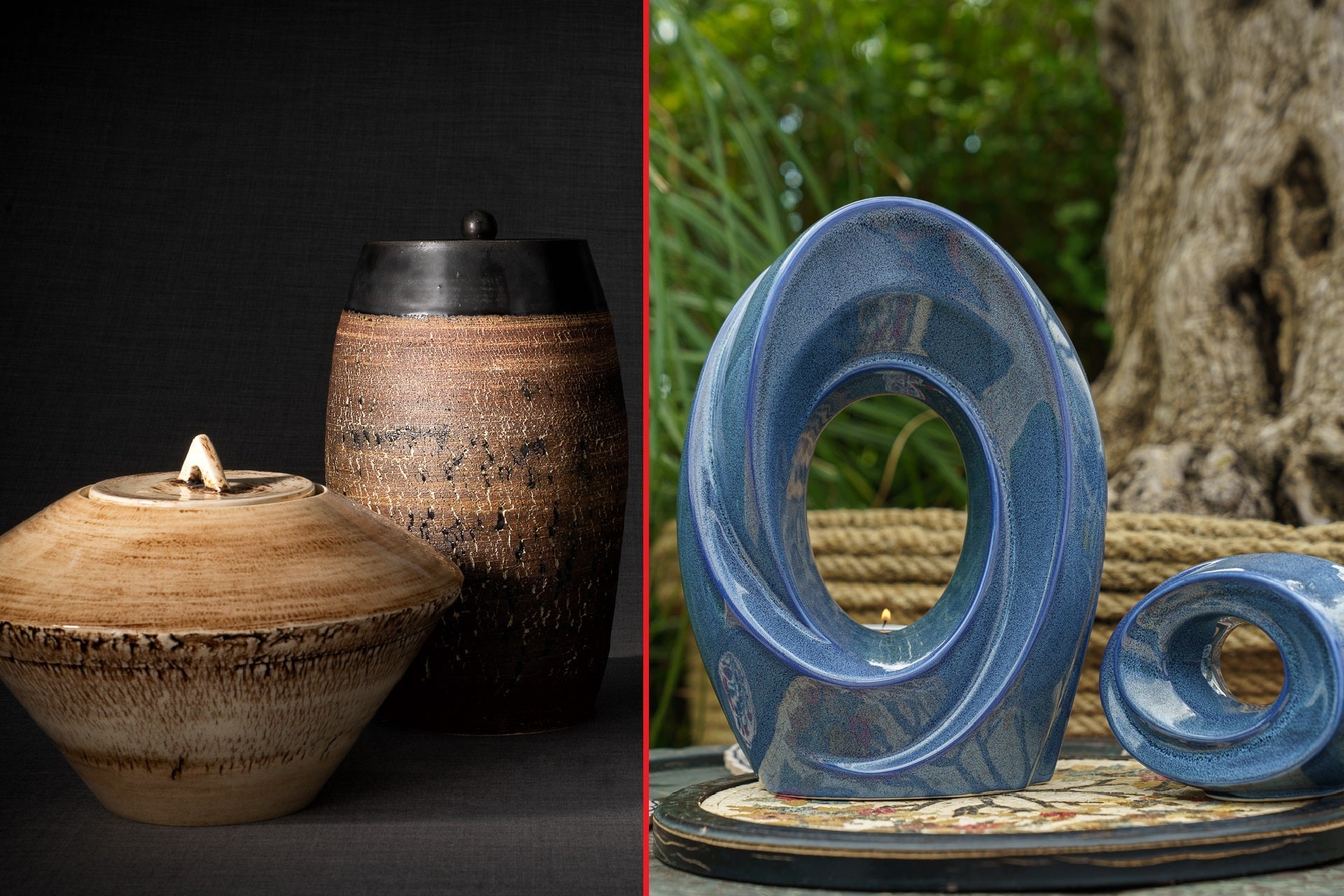
Selecting a cremation urn is a highly personal experience. In many cases, when you see the right urn – you feel it immediately. Traditional cremation urns often have a generic appearance that can be hard to trigger an emotional response, whereas artisan urns with contemporary styles can provide that distinct look and feel that strikes you immediately and feels right.
There’s no right or wrong answer when choosing a cremation urn – it simply depends on staying true to your own emotional response. By summarizing the main design differences between traditional and contemporary cremation urns, this article can help point you in the right direction as you get started on your search for the perfect urn.

Traditional cremation urns have a vase or jug-like shape with a round lid and smooth surface. They’re often gently rounded in form and symmetrical, as if shaped on a pottery wheel. Colors are typically subdued with monochromatic neutral tones. Beige, pewter, and gray are common color choices for traditional urns.
Traditional designs tend to be generalized and standard. They’re quite easy to find because they are so similar in style. In fact, many traditional cremation urns are mass-produced, giving them an identical appearance. People who prefer traditional cremation urns are often looking for something understated that won’t grab a lot of attention or stand out.

And while this can be considered an advantage for some, others may find that traditional cremation urns lack character and don’t capture the full essence of the loved one’s life and memory. Another common complaint with traditional cremation urns is that they can easily be mistaken for other household décor items, like cookie jars, flower vases, and storage bins.
This can lead to some uncomfortable situations when a cremation urn is confused for something else! With that said, a traditional urn may be better for passing down through the family line, since the design is often modest and easy to display anywhere.
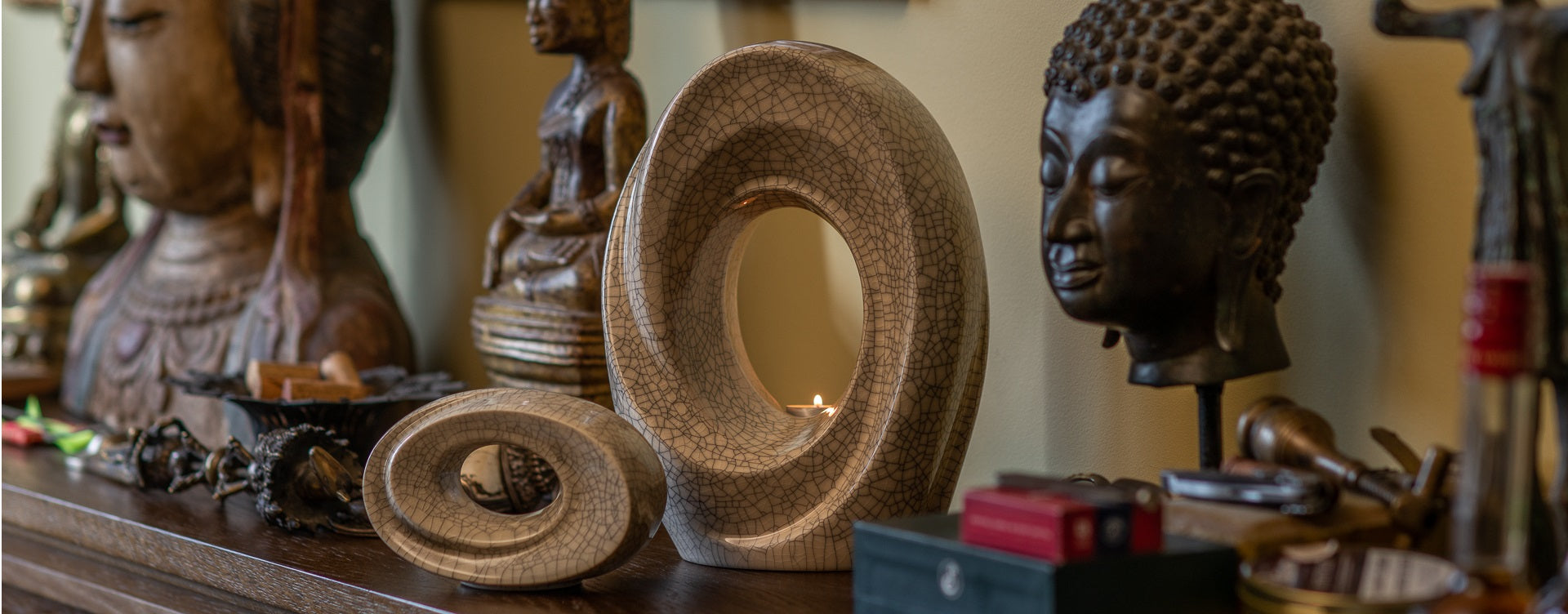
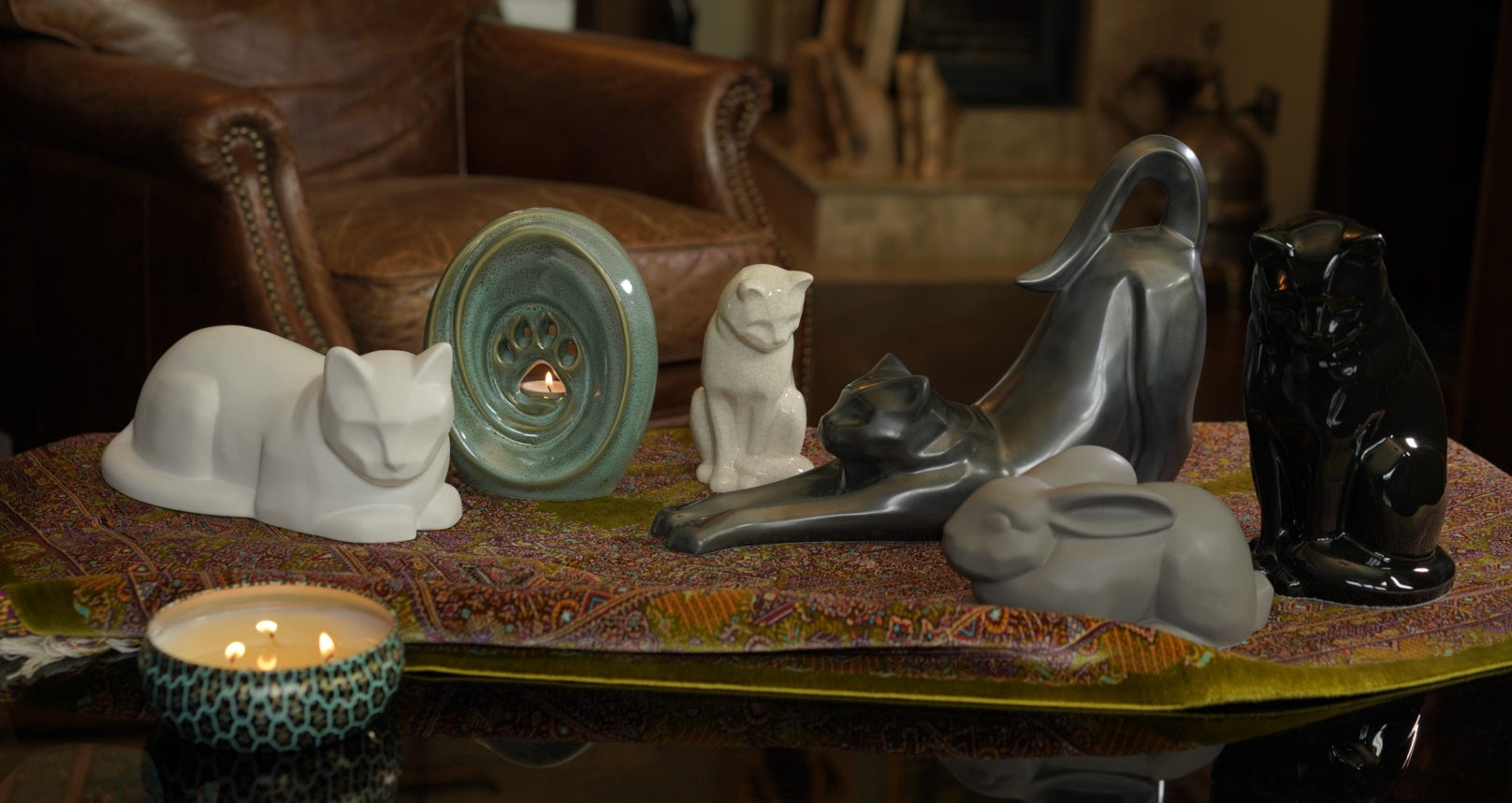
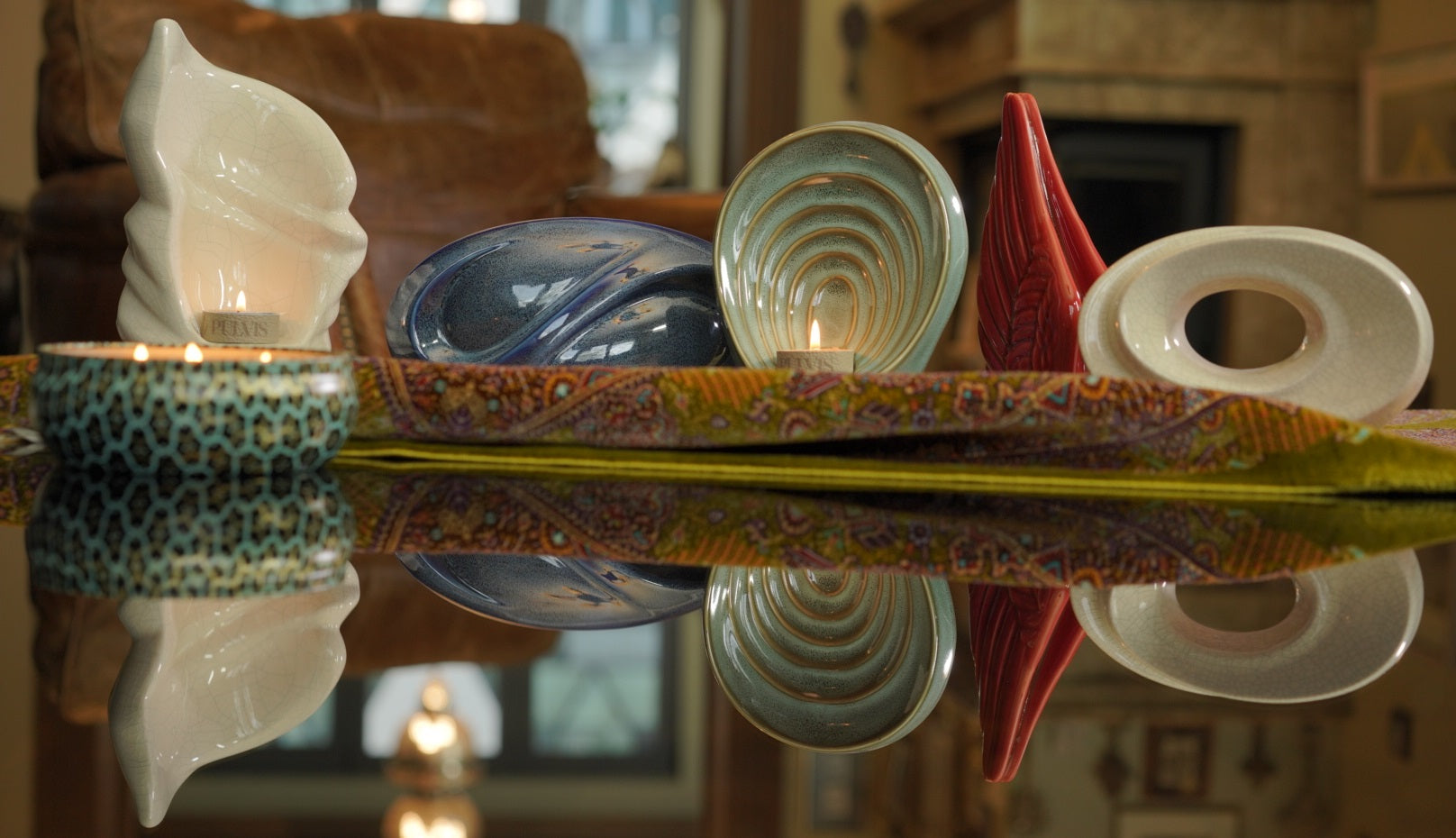
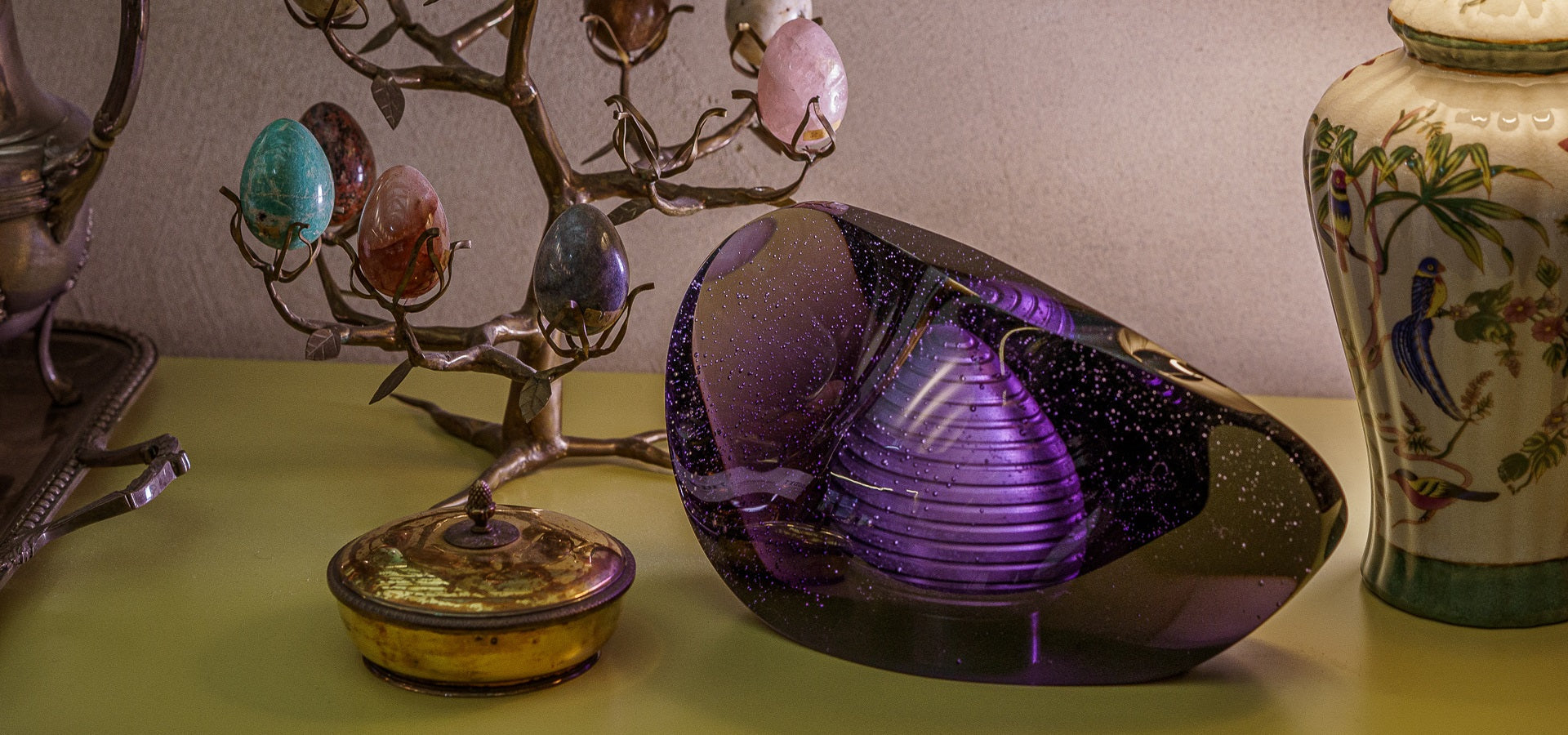
Contemporary cremation urns are much flashier in appearance, and there is such vast variety available, that the designs can’t be summarized in a succinct way. Abstract, ornate, minimalist – contemporary urns cover all the bases. From candlelight elements to colorful ceramic finishes and dynamic shapes, contemporary cremation urns provide a wealth of different design styles to consider.
This variety actually leads to one of the biggest advantages, which is that contemporary cremation urns offer personalized styles that feel much more expressive. These distinct designs tend to capture the spirit and memory of the deceased better than traditional urns. If you prefer a vessel that reflects the life and personality of your loved one, you’ll definitely want to look at artisan urns with distinct styles.
Abstract shapes and bold colors can also strike reflection in a way that traditional jug-style urns don’t. A votive candle feature built into the urn design adds iconic beauty and solemnity to the display, helping it stand out from other home décor pieces. Antique ceramic finishes, dynamic wood elements, recognizable shapes and symbols – contemporary cremation urns truly spark the spirit. Creative and captivating, these artisan urns won’t be mistaken for other décor, especially since they’re each handcrafted individually.

Remember – there’s no right or wrong when it comes to choosing the best cremation urn for your loved one. Hopefully, this article helps guide you in the right direction to find exactly what you’re looking for in a cremation urn.
Join us in helping families honor the memory of their loved ones and pets through art!
Our Affiliate Program is now available at https://www.pulvisurns.com/pages/affiliate-program-by-pulvis-art-urns
Ways to Honour a Loved One Without Visiting a Cemetery
Honouring a loved one doesn't have to be limited to visiting a cemetery. Discover meaningful and heartfelt ways to celebrate their life through personal traditions, living memorials, keepsakes, charitable acts and beautiful remembrance ideas that keep their memory alive every day.
The Emotional Weight of “Lasts”: The Last Conversation, Last Hug, Last Goodbye
The last conversation, last hug, and last goodbye are some of the most emotionally powerful experiences a person can carry. These final moments transform ordinary interactions into lifelong memories, revealing the depth of love, connection, grief, and human attachment. This article explores why we remember final moments so vividly, how they shape the way we process loss, and why appreciating everyday connections matters before they become memories.
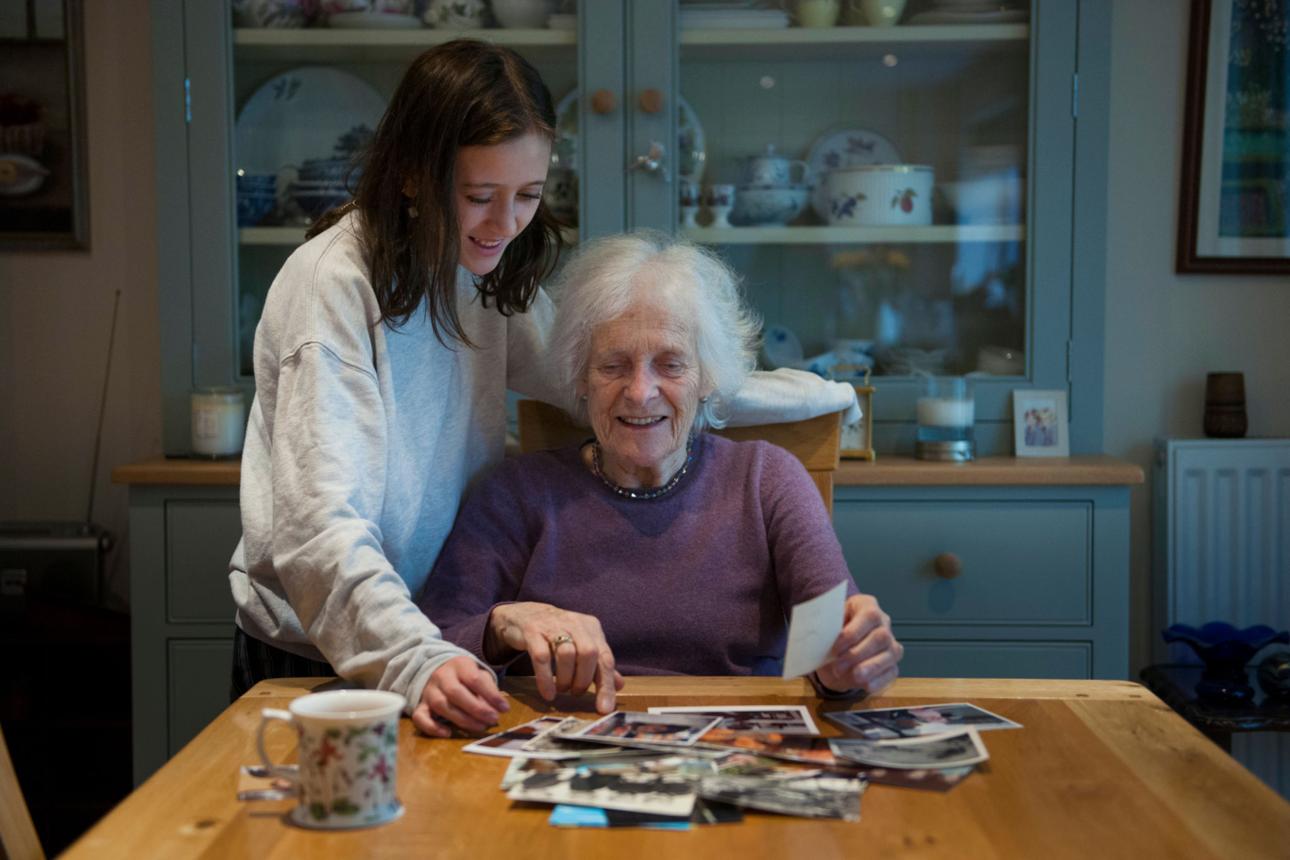
The First Holiday Without Someone: Why It Feels So Different
The first holiday after losing someone we love can feel completely different from any celebration before it. The traditions remain, the decorations appear, and families gather together, but the absence of one important person changes everything. This article explores why holidays intensify grief, how memories are triggered through traditions and senses, and how families learn to honour loved ones while creating new ways to remember.
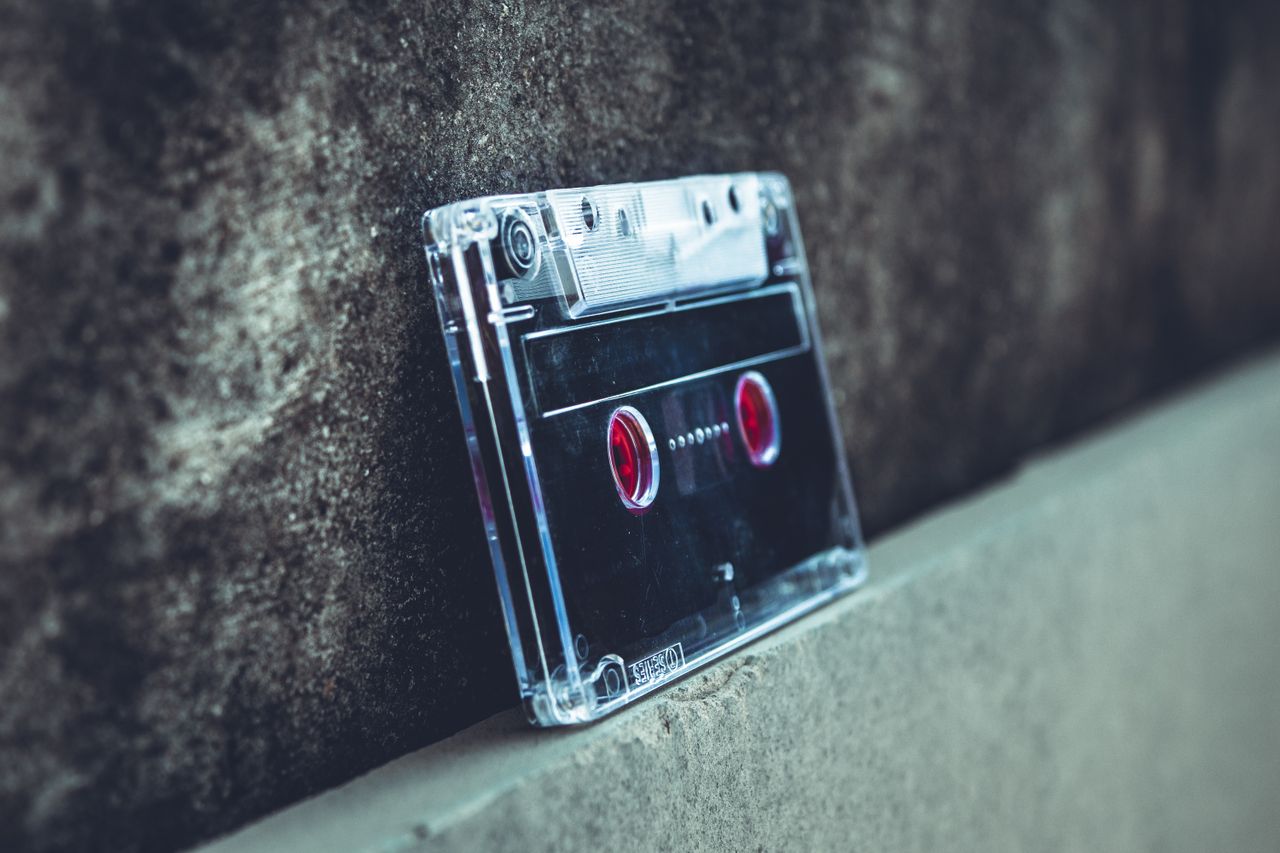
Discover why everyday sounds can become powerful reminders of the people we love. From familiar voices and favourite songs to simple household noises, sound has the ability to preserve memories, awaken emotions, and maintain a connection with those who are no longer physically present.
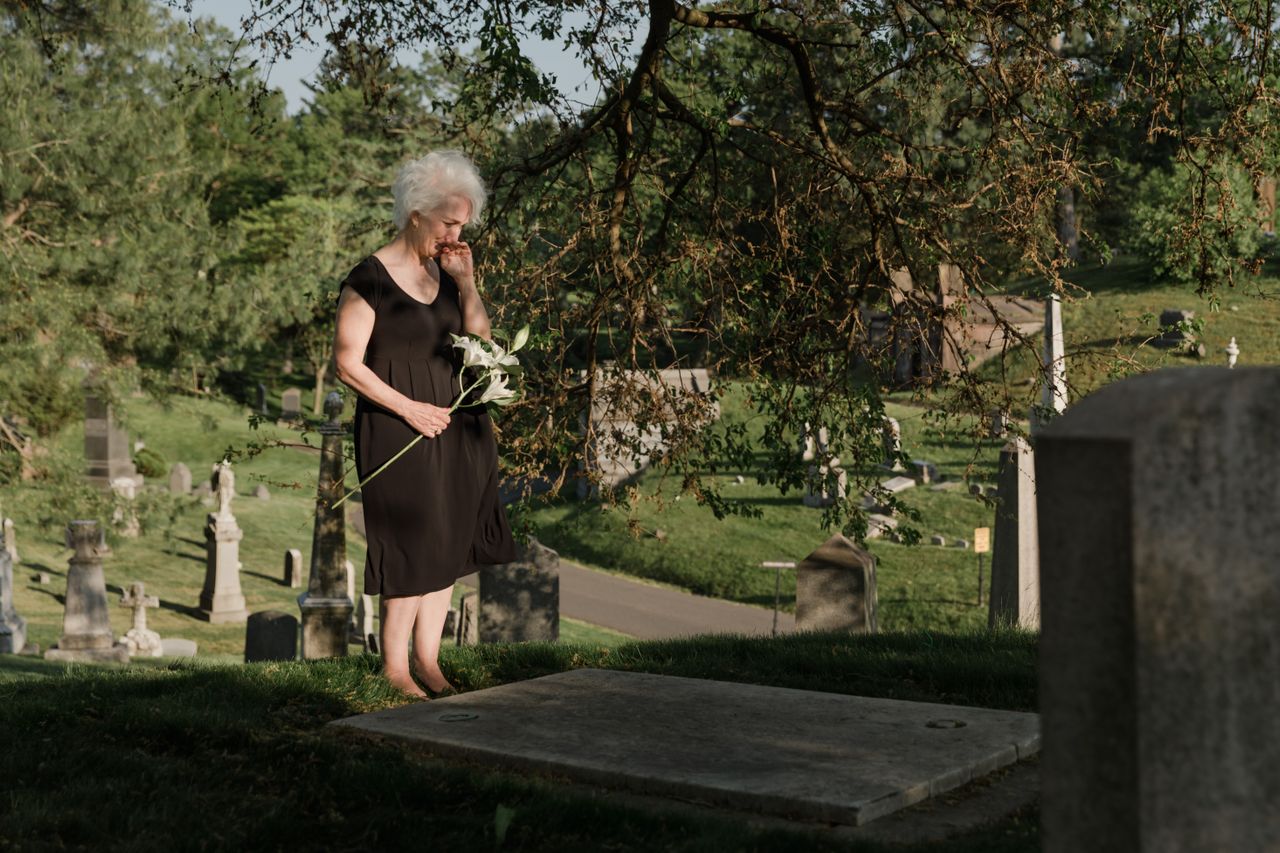
After losing someone we love, ordinary belongings can become some of the most meaningful reminders of their life. A favourite sweater, handwritten note, piece of jewellery, or family recipe can carry memories, emotions, and a sense of connection that goes far beyond the object itself. This article explores why we keep the things left behind, the psychology behind emotional attachment to personal belongings, and how these objects help us preserve love, identity, and family stories after loss.
Share:
How to Write an Obituary
Preserving Ashes: Understanding Different Materials Used in Cremation Urns